
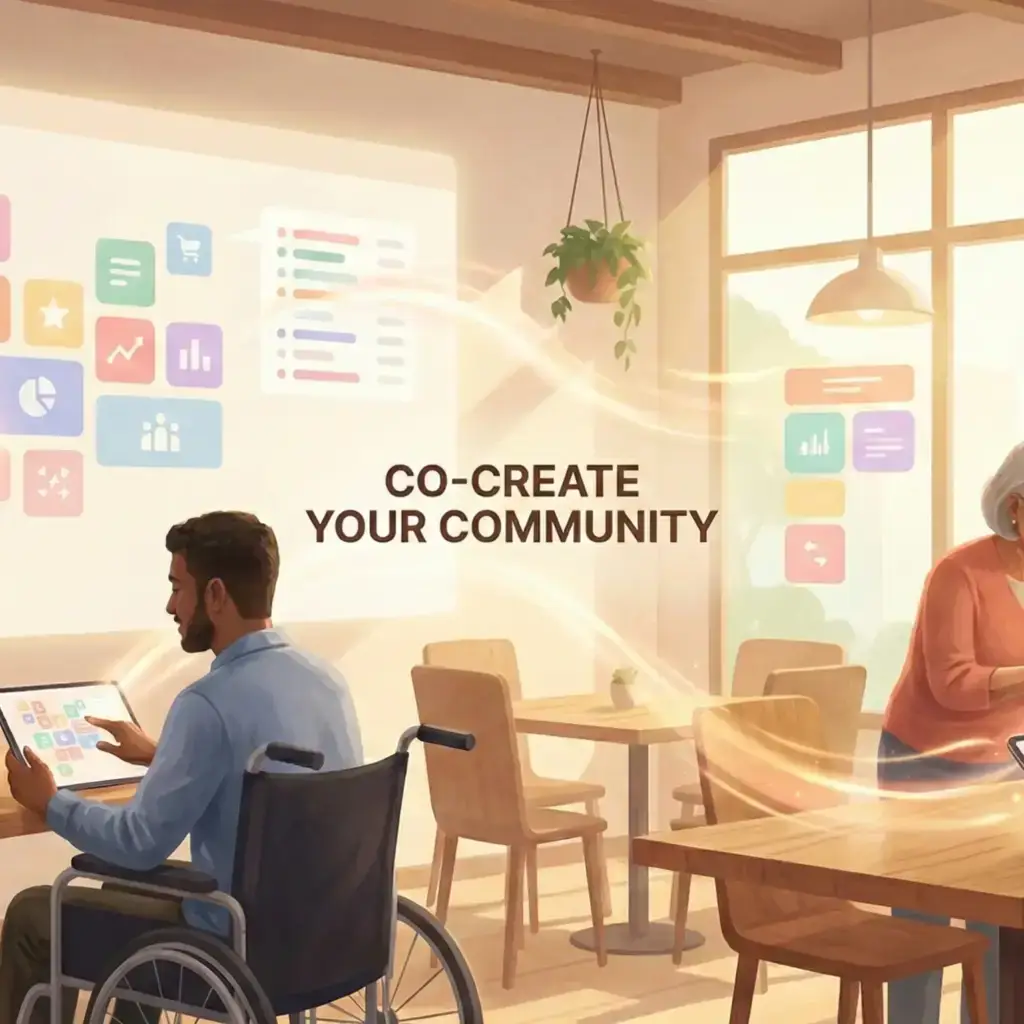
The Quiet Shift That Shaped 2025
For years, brands relied on assumptions, reports, and endless user surveys.
But in 2025, something clicked:
Instead of asking, brands started watching.
Not in a creepy way — just in a practical, human way.
Examples?
If 70% of people hovered over the same confusing button → it got replaced.
If users skipped three steps in onboarding → those steps were removed.
If a popup annoyed everyone → it quietly disappeared.
If people repeatedly searched for the same info → it became a main-page feature.
No drama.
No “innovation strategy.”
Just basic observation.
People used the product.
The product evolved because of people.
That’s co-creation.
What Actually Changed? (In Simple Terms)
Customers didn’t sign up to be co-creators.
They didn’t join programs or communities.
They didn’t fill out long forms.
Their everyday behavior did the talking.
A click became a signal.
A hesitation became feedback.
A repeated action became a pattern.
Brands simply started treating these signals like real conversation points.
Micro-Feedback Became the Real MVP
People don’t want to write essays to explain how they feel about a product.
But they will:
click “helpful”
skip a step
revisit a section
ignore a button
repeat the same action three times
Those tiny actions became incredibly valuable.
Think of them like digital breadcrumbs showing exactly what users need — without them ever needing to say it.
A Simple Example We All Saw This Year
Picture this:
An app launches a redesigned home page.
It looks beautiful… but nobody can find the main feature.
Within a week:
heatmaps show confused taps
app sessions drop
support messages increase
users keep returning to the old flow
Suddenly, the brand realizes the truth:
the old layout worked better because real people had shaped it over time without even noticing.
So the team brings back the familiar flow — cleaner, clearer, but rooted in how users actually behaved.
That’s 2025:
products evolving according to real life, not boardroom theory.
This isn’t a trend that will fade — it’s simply how healthy digital ecosystems work now.
1. Users feel seen.
Because their behavior leads to real changes.
2. Brands build smarter.
Because assumptions cost money; observation doesn’t.
3. Products become more intuitive.
Because they grow naturally from real usage, not imagined needs.
And the best part?
This shift makes the relationship between users and brands feel more human than ever.
Customers aren’t “data points” or “personas.”
They’re active participants — even if they don’t know it.