
For a long time, content strategy looked like publishing one blog post at a time and hoping each piece would perform on its own.
That approach is quietly fading.
Today, brands that earn real visibility and trust are those building content ecosystems — connected networks of ideas that work together, not in isolation.
From Single Posts to Living Knowledge Hubs
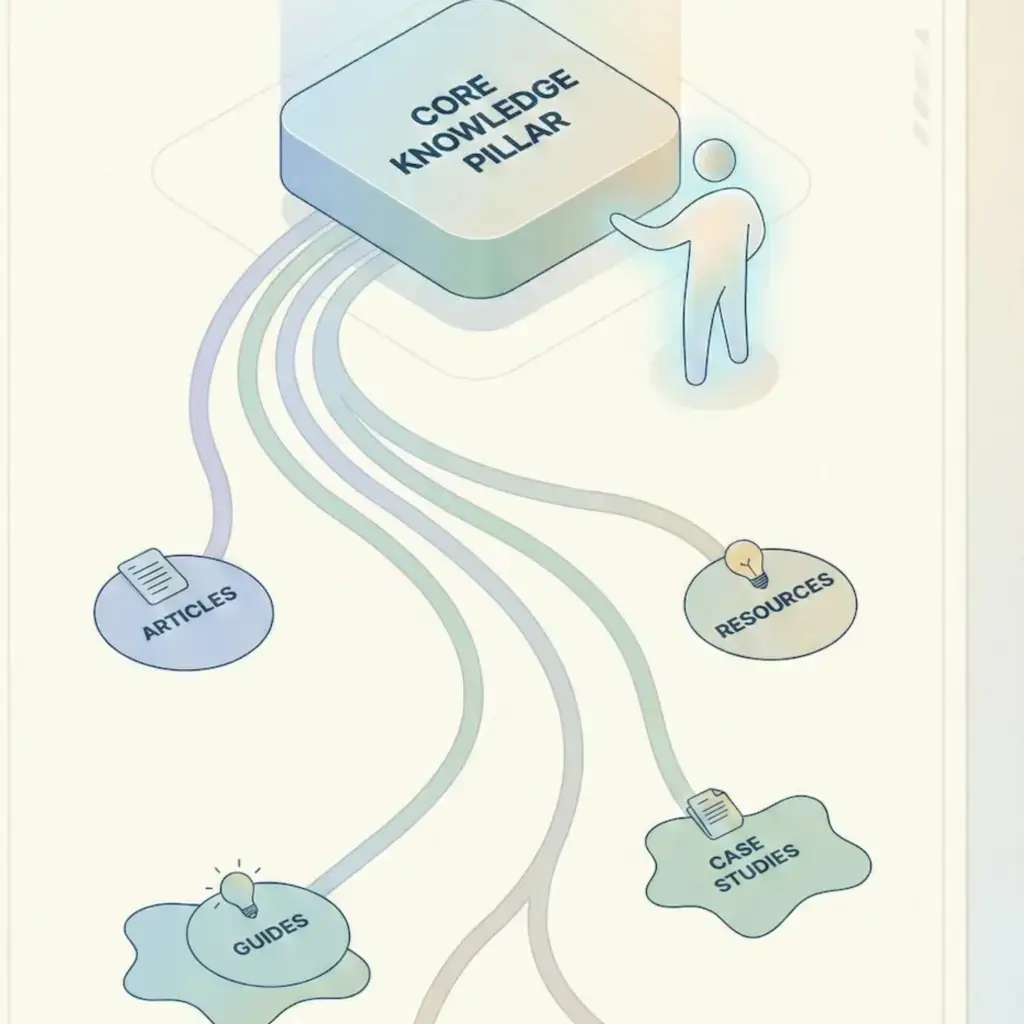
Instead of creating disconnected articles, strong content strategies now revolve around pillar pages — comprehensive resources that cover a topic deeply — supported by smaller, focused articles that explore specific angles.
Each piece links to the others.
Each article strengthens the whole.
The result isn’t just more content — it’s clear authority.
Why This Approach Works Better
Search engines and readers both reward clarity.
When a brand covers a topic from multiple angles — answering related questions, explaining nuances, and updating information — it sends a strong signal:
“This is a place that understands the subject.”
Rather than chasing keywords, content ecosystems build context, and context builds trust.
Semantic Clusters Create Depth, Not Noise
Semantic clusters allow brands to explore topics naturally:
Core explanations
Practical examples
Use cases
Common questions
Supporting insights
Instead of repeating ideas, each article adds value — and points back to the larger picture.
This makes content easier to navigate and easier to trust.
Content ecosystems reflect a deeper change in how people consume information.
They don’t want fragments.
They want understanding.
And brands that organize their knowledge clearly don’t just rank better — they serve better.